Estrogen dominance occurs when estrogen levels are too high relative to other hormones, particularly progesterone, resulting in a variety of symptoms and health issues. This blog aims to demystify estrogen and estrogen dominance by exploring causes and symptoms.
Estrogen is a fundamental hormone in the female body, playing a vital role in various physiological processes. It influences everything from reproductive health and sexual development to bone density and cardiovascular function. Despite its importance, estrogen is often misunderstood, leading to misconceptions about its role in the body.
One such misconception is that estrogen is inherently harmful. In reality, issues primarily arise when estrogen levels become imbalanced, leading to a condition known as estrogen dominance.
By understanding estrogen better, women can take proactive steps to maintain hormonal balance and overall well-being.
Types of Estrogen
- Estrone: Estrone is the primary estrogen made after menopause.
- Estradiol: Estradiol is the most prominent estrogen during the childbearing years. Estradiol is a potent and active estrogen.
- Estriol: Known as the estrogen of pregnancy. Estriol is believed to be the “protective” estrogen.
Where Does Estrogen Come From
Estrogen is produced through a complex interplay of various sources within the body.
Primarily, the ovaries are responsible for estrogen production during the reproductive years.
Estrogen is also produced by the adrenal glands, which secrete small amounts of estrogen precursors.
Fat tissues contribute to estrogen levels, particularly after menopause when ovarian production decreases.
The gut microbiome plays a significant role in estrogen metabolism, influencing the balance and elimination of estrogen in the body.
Enzymes also facilitate the conversion of other hormones into estrogen, ensuring a dynamic and responsive system that adapts to the body’s needs.
This combination of sources highlights the intricate and multifaceted nature of estrogen production and regulation in the body.
Let’s Get Something Straight Though – Estrogen is NOT Bad!
Despite common misconceptions, estrogen is not inherently bad; in fact, it is a crucial hormone that contributes significantly to feminine characteristics and overall health. Estrogen is responsible for enhancing your curves, contributing to breast development, and increasing the size of your hips. It also plays a vital role in maintaining soft, supple skin.
Beyond its impact on physical appearance, estrogen offers substantial health benefits. It protects your bones by maintaining bone density, reducing the risk of osteoporosis.
Estrogen also supports cardiovascular health by helping to regulate cholesterol levels and protect against heart disease.
Moreover, it plays a crucial role in mental well-being by influencing mood and cognitive function.
When estrogen levels are balanced, it helps you feel good both physically and mentally, contributing to a youthful and vibrant appearance and enhancing your overall quality of life.
Too Much of a Good Thing
Problems arise when estrogen levels are too high or high in relation to other hormones.
“Estrogen Dominance”, high estrogen, was coined by Dr John R Lee M.D., a Harvard graduate famous for his research on progesterone. This is the most common hormonal imbalance affecting women today and it affects both young and older women.
When estrogen levels are high in relation to progesterone levels, this is known as “relative estrogen dominance”. This can occur even when estrogen levels are “low” such as during menopause.
What Causes Estrogen Dominance?
A combination of multiple factors can cause estrogen dominance including:
- Impaired estrogen metabolism.
- Poor estrogen detoxification.
- Higher production of estrogen by the ovaries (this one usually occurs during perimenopause).
- Too little progesterone.
The are many other factors that play a role in this hormonal imbalance as well.
Excess Body Fat
Excess body fat can contribute to estrogen dominance through several mechanisms. Fat tissue is not merely a passive storage site for energy but also an active endocrine organ that produces hormones, including estrogen. The more body fat you have, the more estrogen is produced by these fat cells, which can lead to elevated levels of estrogen in the body.
Fat tissue contains an enzyme called aromatase, which converts androgens (hormones produced by the adrenal glands and ovaries) into estrogen. This conversion process can significantly increase the levels of estrogen, especially in individuals with higher amounts of body fat.
Excess body fat can interfere with the body’s ability to metabolize and eliminate estrogen. The liver, which plays a crucial role in detoxifying and removing excess estrogen from the body, can become overwhelmed or impaired in individuals with high body fat.
High levels of body fat can disrupt the balance between estrogen and progesterone. As fat cells produce more estrogen, the relative levels of progesterone can become insufficient to balance the high estrogen levels.
Excess body fat is often associated with inflammation and insulin resistance, both of which can further disrupt hormonal balance. Chronic inflammation can affect hormone production and metabolism, while insulin resistance can lead to increased production of androgens, which are then converted to estrogen by aromatase in fat tissue.
Xenoestrogens and Endocrine System Disruptors
Xenoestrogens and endocrine system disruptors can lead to estrogen dominance by mimicking or interfering with the body’s natural hormones, particularly estrogen. These synthetic or natural compounds can be found in various environmental sources, such as plastics, personal care products, pesticides, and industrial chemicals.
Xenoestrogens closely resemble estrogen and can bind to estrogen receptors in the body. When xenoestrogens bind to these receptors, they can mimic the effects of natural estrogen, leading to an increase in overall estrogenic activity. This added stimulation can contribute to higher-than-normal estrogen levels, disrupting the hormonal balance and leading to estrogen dominance
Endocrine disruptors interfere with the synthesis, metabolism, and regulation of hormones. By affecting how natural hormones are produced, broken down, and eliminated, endocrine disruptors can cause imbalances. For instance, they can inhibit the production of progesterone or other hormones that help balance estrogen, tipping the scales in favor of estrogen dominance.
Stress and Estrogen
Stress can lead to estrogen dominance through a variety of mechanisms that affect hormonal balance.
When stress levels are high, the body produces cortisol. This is the primary stress hormone in the body. Chronic stress leads to sustained high levels of cortisol.
Production of cortisol relies on the same precursor as progesterone, called pregnenolone. So when your body suffers from prolonged stress, more pregnenolone is diverted to the production of cortisol, This reduces the amount available to produce progesterone.
Chronic levels of stress can also impair liver function. This will make it more difficult for the liver to process and excrete estrogen, leading to higher circulating levels of estrogen.
Insulin resistance is a condition where the body’s cells become less responsive to insulin. Chronic stress can contribute to insulin resistance, which leads to weight gain, particularly abdominal fat. This produces additional estrogen through the enzyme aromatase, further contributing to estrogen dominance.
Stress also increase inflammation in the body. Inflammatory cytokines can interfere with hormone signaling and metabolism, affecting the balance between estrogen and progesterone.
Lifestyle Factors
Poor diet, lack of exercise, and increased consumption of alcohol can all worsen estrogen dominance. They can affect liver function, increase body fat, and disrupt overall hormonal levels and balance.
Imbalanced Gut Microbiome
Many people don’t know how impactful the gut can be on hormone levels.
The gut microbiome includes a specific subset of bacteria known as the estrobolome. These bacteria are responsible for metabolizing estrogens and produce enzymes.
One particular enzyme, beta glucuronidase, influences the reabsorption of estrogen. When beta-glucuronidase levels are too high, more estrogen is reabsorbed back into the bloodstream instead of being excreted.
Factors such as poor diet, antibiotics, stress, and environmental toxins can lead to dysbiosis, which can also lead to increased beta-glucuronidase.
Gut health and inflammation are closely linked. Chronic inflammation in the gut can impact the liver’s ability to detoxify hormones and disrupt the gut barrier, leading to a condition known as intestinal permeability or as most people know it by, “leaky gut.”
A leaky gut allows endotoxins and other inflammatory substances to enter the bloodstream, which can further impair hormone metabolism and exacerbate estrogen dominance.
The gut microbiome plays a role in the metabolism of bile acids. Bile acids are produced by the liver and are essential for the digestion and absorption of fats and fat-soluble vitamins. An unhealthy gut can disrupt bile acid metabolism, leading to impaired estrogen secretion.
Hormonal Birth Control
Of the treatments offered for symptoms of estrogen dominance, the most prescribed is hormonal birth control. While there is nothing wrong with using hormonal birth control for family planning, more birth control prescriptions are written for hormone imbalance, than for the prevention of pregnancy.
Women are given prescriptions for birth control with the promise that their periods will be “normalize”. But this just isn’t true.
Birth control suppresses your own hormones and shuts down your natural cycle, which can disrupt the balance between estrogen and progesterone. While on birth control, the body’s production of natural progesterone is significantly reduced, as ovulation is halted. This reduction in natural progesterone can lead to a relative increase in estrogen, contributing to estrogen dominance.
Hormonal birth control increases the levels of sex hormone-binding globulin (SHBG) in the blood. SHBG binds to sex hormones, including estrogen, reducing their bioavailability. However, this can create a complex dynamic where the total levels of estrogen remain high, even if free, bioavailable estrogen is regulated, contributing to an overall higher estrogenic environment in the body.
The intake of synthetic hormones, introduced by birth control, can also have an effect on the liver. This increased load can burden the liver, making it less efficient at detoxifying and clearing out both synthetic and natural estrogens from the body.
Hormonal birth control can contribute to low-grade chronic inflammation and insulin resistance. Both conditions can interfere with hormone metabolism and balance. Inflammation can impair liver function, while insulin resistance can lead to weight gain and increased fat tissue, which produces more estrogen.
Age and Estrogen
Estrogen dominance can start early in a woman’s menstrual history. Young women with estrogen dominance tend to suffer difficult periods and often end up on birth control to regulate cycles.
Estrogen dominance affects women later in life during perimenopause and menopause too. As women age, the adrenal glands may not produce hormones as efficiently, including progesterone and androgens that can be converted to estrogen. This inefficiency can contribute to an imbalance where estrogen levels, even if low, are higher relative to other hormones.
Ovulation becomes less regular during perimenopause, leading to inconsistent production of progesterone. Since progesterone is primarily produced after ovulation, irregular ovulation results in lower overall progesterone levels, tipping the hormonal balance in favor of estrogen.
After menopause, estrogen is still produced in smaller amounts by the adrenal glands and fat tissue. Since progesterone production significantly diminishes post-menopause, any remaining estrogen can easily become dominant.
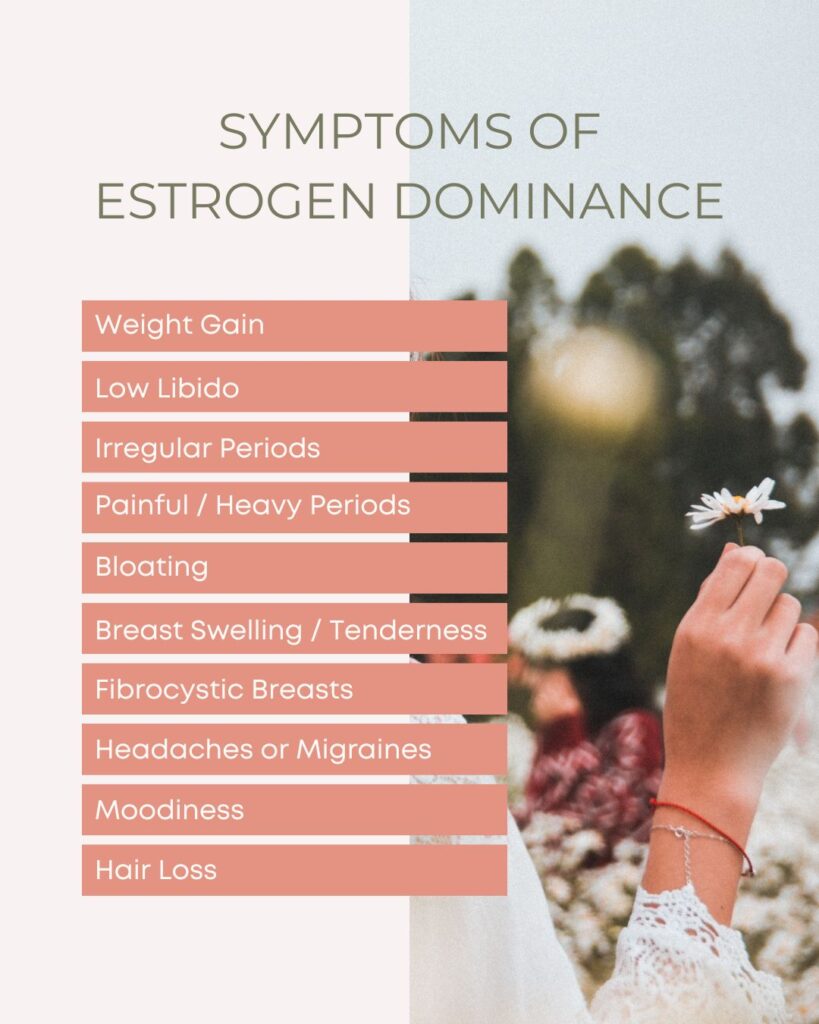
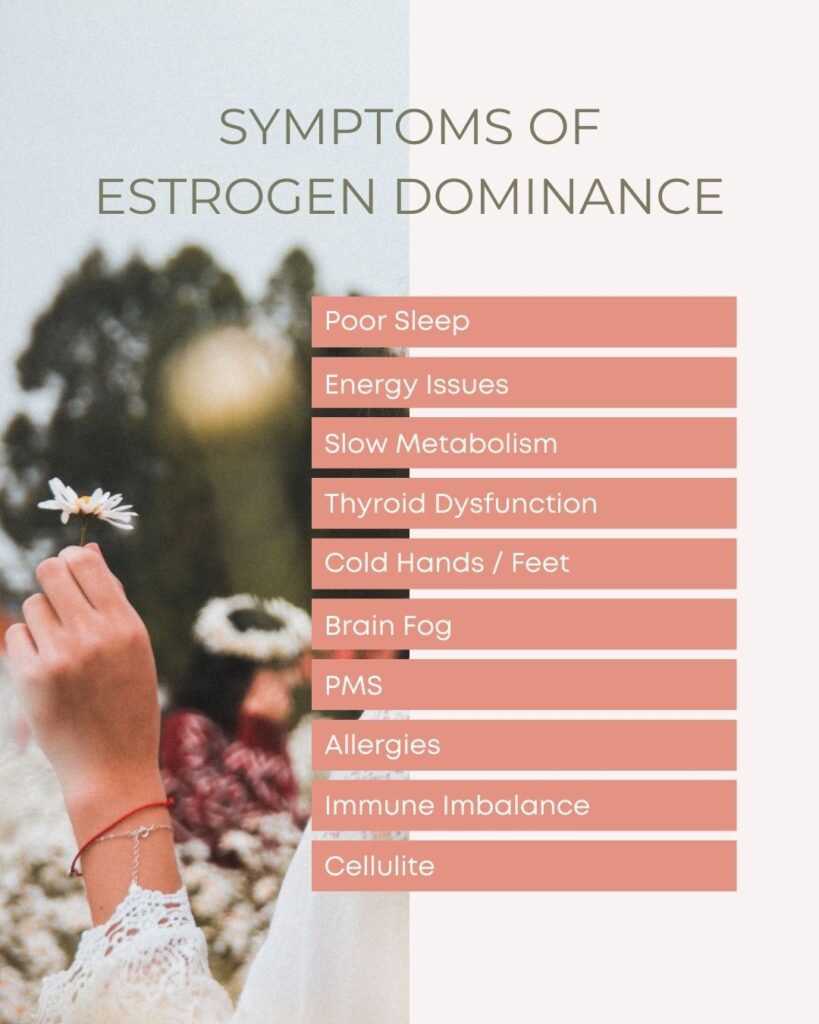
Signs That You Might Have Estrogen Dominance
Don't Ignore the Signs
Hormone imbalance left untreated can lead to future health problems such as:
- Thyroid disease
- PCOS
- Endometriosis
- Cysts
- Infertility
- Autoimmune
- Cancer
Hormone Testing for Estrogen Dominance
If you suspect you have estrogen dominance, you can ask your doctor to measure your estradiol levels with a blood test.
In my practice I use the DUTCH test. This is a comprehensive hormone test that provides and in-depth analysis of an individual’s hormonal health, allowing me to develop a personalized plan.
Unlike traditional blood tests, this test measures hormones and their metabolites using dried urine samples collected over a 24-hour period. It offers insights into the balance of key hormones, including estrogen, progesterone, testosterone, cortisol, and their respective metabolites, providing a detailed picture of hormone production and metabolism.
Additionally, it assesses adrenal and sex hormone health, helping to identify issues like estrogen dominance, adrenal fatigue, and other hormonal imbalances.
Taking the Next Steps
Estrogen dominance is a common yet often misunderstood hormonal imbalance that can significantly impact women’s health. By understanding its causes, symptoms, and contributing factors, women can take proactive steps to address estrogen dominance and achieve better hormonal balance.
Maintaining a healthy lifestyle, supporting liver and gut health, and managing stress are key to managing estrogen levels effectively.
If you suspect you have estrogen dominance, seek guidance from a healthcare provider to develop a personalized treatment plan. Through education and proactive management, women can achieve optimal health and well-being.
Set up a discovery call HERE today!
And head over to my IG page HERE for tips on how to balance hormone levels – and much more.