Free radicals or oxygen reactive species (ROS) and oxidative stress (OS) are terms we hear quite often when we are talking about the importance of antioxidants. But conversations about oxidative stress and male fertility happen a lot less.
Oxidative Stress Background
ROS are unstable atoms or molecules that have unpaired electrons. This makes them highly chemically reactive and can cause damage to cells in the body. OS contributes to many conditions and disease including neurological disorders, atherosclerosis, hypertension, ischemia, diabetes, acute respiratory distress syndrome, idiopathic pulmonary fibrosis, chronic obstructive pulmonary disease, asthma, and cancer (Birben et al., 2012). And, quite significantly, it’s also been tied to fertility challenges, including male fertility.
When Oxidative Stress Takes Over
Think of free radicals as those uninvited guests at a party—except this party is your body, and the guests are a tad too unruly. When they’re not kept in check, they can stir up quite a fuss. So, when the free radicals outnumber the bouncers – our antioxidants – things can get out of hand, leading to what’s called oxidative stress (OS).
Oxidative stress is a bit like a silent alarm—it may not always cause immediate symptoms, but it can contribute to a longer list of unwanted guests. ROS can destroy cell membranes, block the action of major enzymes, prevent cellular processes necessary for proper functioning of the body, prevent normal cell division, destroy DNA, and block energy generation (Kurutas, 2016).
ROS are not always “bad”. At low levels, these are needed to create balance in the body through many different processes. Some of these natural biological processes include breathing, digesting food, metabolizing alcohol and drugs (prescribed or otherwise), intracellular destruction of bacteria, immune cells, turning fats into energy, and especially the mitochondrial electron transport chain. But like that one friend who doesn’t know when to stop, free radicals can go overboard. This causes oxidative stress and irreversible changes in cell compounds, including proteins, carbohydrates and lipids (fats), in addition to disrupting normal cellular-signaling mechanisms (Sharifi-Rad et al., 2020).
Beyond natural processes in the body, there are many other factors that cause OS. Environmental triggers, such as exposure to cigarette smoke, UV radiation, heavy metal ions, ozone, allergens, drugs or toxins, pollutants, pesticides, or insecticides, unhealthy diet, lack of exercise, and food additives may all contribute to the increase of ROS production in cells.
Oxidative Stress and Male Fertility
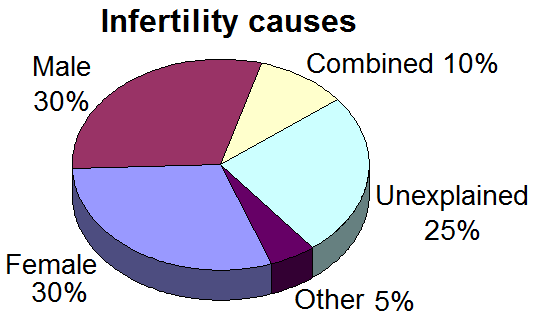
Let’s talk about the elephant in the room—or rather, the statistic that’s hard to ignore. Data shows that the “quality of human semen has deteriorated by fifty to sixty percent over the last forty years” (Skoracka et al., 2020). And as you can see from the graph below, male factor and female factor infertility are listed as being equal.
It's Not Just a Women's Fertility Issue
Sperm are highly vulnerable to OS, and this is mainly due to limited levels of antioxidant defense and a single, limited DNA-damage detection and repair mechanism. Not only does OS affect sperm motility and number, but also sperm-oocyte (egg) fusion. This can lead to pregnancy loss, in addition to congenital malformation, complex neuropsychiatric disorders, and childhood cancers in children fathered by men with defective sperm cells (Bisht et al., 2017). I’d say that’s a pretty good reason for men to focus on their health for fertility as well.
A systematic review by Giahi et al. (2016) found that high caloric diets, high-fat diets (think fast and processed foods), and male obesity may impair spermatogenesis (sperm production), reduce sperm concentration and motility, and worsen sperm DNA damage. This is particularly true in infertile obese men with diabetes, dyslipidemia, or metabolic syndrome due to the elevated risk of oxidative stress in the testicular environment.
So ladies, this doesn't just fall on you!
Oxidative Stress, Diet, Lifestyle, and Male Fertility: Connecting the Dots
By making modifiable dietary and lifestyle changes, you can also increase sperm quality and fertility outcomes. And although erectile dysfunction (ED) doesn’t necessarily cause infertility, it can affect couples trying to conceive since an erection might not be able to be sustained long enough for a man to ejaculate during intercourse and potentially fertilize an egg. But both infertility and ED do have some of the same root causes. But don’t worry, we’ll tackle ED on another day.
Beyond making dietary and lifestyle changes, antioxidants neutralize ROS and decrease OS. Some antioxidants include vitamins A, C, and E, alpha lipoic acid, and glutathione. There are also cofactors to antioxidants such as zinc, selenium, copper, iron, and manganese. Eating a variety of fruits and vegetables can help support your levels but sometimes it’s hard to replenish your needs just through foods (for many reasons). That’s why we also supplement based on your specific needs.
Supporting Male Fertility
I’m here not only to support the wonderful women on their path to motherhood but also to partner with the men in their lives. Please reach out to find out more about how we can measure your oxidative stress markers, antioxidant levels, and personalize a program for your specific needs and goals.
Click the link below!
References
Birben, E., Sahiner, U. M., Sackesen, C., Erzurum, S., & Kalayci, O. (2012). Oxidative Stress and Antioxidant Defense. The World Allergy Organization Journal, 5(1), 9–19. https://doi.org/10.1097/WOX.0b013e3182439613
Bisht, S., Faiq, M., Tolahunase, M., & Dada, R. (2017). Oxidative stress and male infertility. Nature Reviews. Urology, 14(8), 470–485. https://doi.org/10.1038/nrurol.2017.69
Kurutas, E. B. (2016). The importance of antioxidants which play the role in cellular response against oxidative/nitrosative stress: Current state. Nutrition Journal, 15, 71. https://doi.org/10.1186/s12937-016-0186-5
Sharifi-Rad, M., Anil Kumar, N. V., Zucca, P., Varoni, E. M., Dini, L., Panzarini, E., Rajkovic, J., Tsouh Fokou, P. V., Azzini, E., Peluso, I., Prakash Mishra, A., Nigam, M., El Rayess, Y., Beyrouthy, M. E., Polito, L., Iriti, M., Martins, N., Martorell, M., Docea, A. O., … Sharifi-Rad, J. (2020). Lifestyle, Oxidative Stress, and Antioxidants: Back and Forth in the Pathophysiology of Chronic Diseases. Frontiers in Physiology, 11. https://www.frontiersin.org/articles/10.3389/fphys.2020.00694
Skoracka, K., Eder, P., Łykowska-Szuber, L., Dobrowolska, A., & Krela-Kaźmierczak, I. (2020). Diet and Nutritional Factors in Male (In)fertility—Underestimated Factors. Journal of Clinical Medicine, 9(5), 1400. https://doi.org/10.3390/jcm9051400