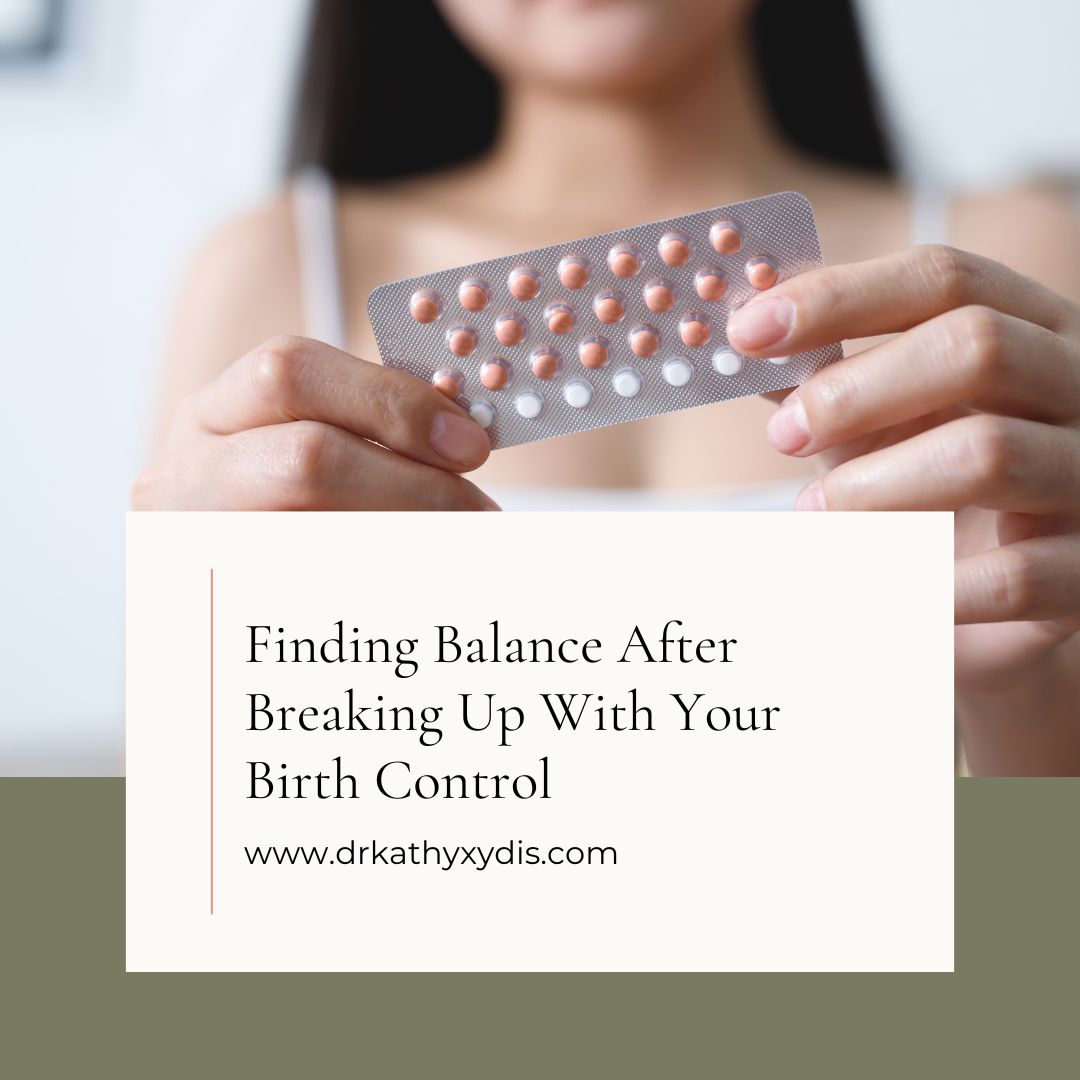
Let me be clear here – I am not vilifying birth control, but birth control methods like pills, rings, patches, and shots are prescribed to women for many reasons besides preventing pregnancy. If you’ve made a personal decision to breakup with your birth control for any reason, keep reading. Even if you plan on staying on your birth control, there is information that’ll help when it comes to supporting nutrients that are depleted while on it.
Many times, my clients will tell me that the only solution presented to them for menstrual cramps, endometriosis, PMS, and polycystic ovarian syndrome (PCOS) was some form of birth control.
Newsflash: birth control does not resolve hormone imbalance
Hormonal birth control methods rely on synthetic hormones to address these hormonal conditions. While they may work for a short time in reducing symptoms, they never address the real underlying cause of the problem, nor do they permanently resolve hormone imbalance.
Because birth control puts synthetic hormones into your system, it disrupts your endocrine system (aka the hormone system) and suppresses both ovulation and your natural hormones. Synthetic hormones do not offer the same protective qualities as your own natural hormones and can lead to health problems.
Cycles Can Take Months to Return to Normal
Studies show it can take two to six months after a woman comes off hormonal birth control for her fertility to return. For some women, fertility suppression can linger for many months – even years. For someone who is wanting to get pregnant, that can be a problem.
What About Copper IUD
Even if you have been using a copper IUD that does not release hormones into the system – it can still take some time to get your period and ovulation back in full swing. This is because copper IUDs change your uterus’s internal environment. These changes in the uterus can make implantation more challenging until the tissues normalize.
Also, you run the risk of copper toxicity. Along with the side effects of this, high levels of copper block the absorption of zinc, which is extremely important, especially for fertility.
Symptoms Return and May Be Worse
In most cases, when you decide to discontinue hormonal birth control pills or devices, the reasons you started using them in the first place will likely still be present. Suppose you were using hormonal birth control pills or devices to reduce symptoms of hormonal imbalance. Once your birth control medication is no longer suppressing your hormones, your initial symptoms will likely come back and sometimes may even be worse.
So, it might be better for you to figure out how to address these symptoms naturally. It is absolutely possible to do this, but it requires work and patience on your part. It’s also extremely important to work with a knowledgeable practitioner who will listen you.
Birth Control Methods Are Not Addictive
You can stop them entirely at any time without weaning yourself slowly off them. However, when discontinuing any medication, you want to inform your doctor.
If you intend to stop using your synthetic birth control, consider stopping at the end of your current pill pack or during/at the end of your period. While there are no consequences to stopping mid-cycle, this will limit inconsistencies with your cycle. Plus, this will make it easier to start tracking your natural cycles.
If you are discontinuing your birth control because you want to get pregnant, consider doing it at least six months before trying to conceive. This will ensure your body is in the best state to nourish a baby, especially since birth control can deplete you of certain nutrients and can affect your microbiome.
Detoxing After Your Breakup with Birth Control
When you take birth control medications, your liver becomes the most taxed organ in your body. It has the extra job of metabolizing all the synthetic hormones you are putting into your body. When you cleanse your liver, you support the detoxification process, leading to proper balance and ensuring an overall healthier state of your body.
The uterus also gets taxed by hormonal birth control. Progestin causes the uterine lining to thin and become weaker. It would help if you had dietary and herbal support to tone and cleanse it to bring it back to proper functioning.
Herbs for Liver Support
Milk thistle is my favorite herb to support the liver. In cases of overdoes and environmental exposures, milk thistle is used to help the body release the toxins and recover. For fertility, the focus is on getting toxins out and making the body strong and able to carry a healthy pregnancy.
Dandelion Root is notoriously bitter and is perfect for stimulating bile and again encouraging the liver to release toxins and function at its best.
Herbs as Uterine Tonics
Raspberry Leaf tones uterine muscles and normalizes menstrual blood flow. Beloved by midwives, red raspberry leaf is most consumed as a tea. This is also my favorite way.
Ginger Root is beautifully warming, anti-inflammatory, and supportive of healthy circulation. Ginger compliments the other herbs and addresses inflammation as a trigger for imbalance.
Dong Quai may help boost iron absorption and increases circulation. Traditional Chinese Medicine practitioners use Dong Quai to restore menstruation. *Do not use if you have heavy bleeding.
Foods to Support Detoxification
Eat Organic whenever possible to reduce your exposure to pesticides. If you cannot eat entirely organic, check out the Environmental Working Group’s Dirty Dozen and Clean 15 lists for guidance. https://www.ewg.org/foodnews/clean-fifteen.php
Eat 9 Servings of Produce. Incorporate polyphenols and flavonoids through a high-produce diet. Phase 2 detox is dependent on nutritional status, so eating a healthy diet is critical.
Cilantro and Parsley bind to heavy metal toxins and move them out of the body. Use cilantro and parsley in your foods, smoothies, or make a detox pesto. You can also add these to a fresh greens juice.
Eat Blueberries regularly, as they possess unique phytonutrients with exceptional detoxifying abilities. The powerful antioxidants in blueberries help repair oxidative damage while detoxifying.
Glutathione Boosting Foods. While foods do not contain glutathione, sulfur-rich foods such as garlic, onion, leeks, grass-fed beef, and bone broth boost your body’s glutathione production.
Selenium acts as a mercury magnet with a strong binding affinity for toxins. Shrimp, scallops, mushrooms, eggs, and Brazil nuts (2 daily) are good sources of selenium.
Magnesium and Zinc are essential for detoxification. Incorporate quinoa, mung beans, flax, and buckwheat.
High Quality Protein (organic, pasture raised, grass fed/grass finished, wild caught, etc). Protein is essential for phase one detox. Get a variety of sources such as eggs, chicken, turkey, beef, and fish, especially salmon.
Cruciferous Vegetables such as kale, cabbage, Brussels sprouts, broccoli, and broccoli sprouts have antioxidants that increase detoxifying enzymes in the body – especially for estrogen metabolism.
Atlantic Dulse is a seaweed that binds to lead, aluminum, copper, cadmium, and nickel. Atlantic dulse is a mighty force for eliminating mercury.
Water and Celtic Sea Salt. Hydration is essential to remove toxins from the body and to deliver nutrients to the cells. For adrenal support, put a pinch of celtic sea salt in room temperature water and drink that upon waking.
Other Modalities to Support Detoxification
I won’t go into detail here, but other ways you can support detoxification are oil pulling, tongue scraping, bentonite clay & Epsom salt bath, castor oil packs, and body brushing. Please make sure to consult a reputable source on how to do these correctly. For example, you will only want to do castor oil packs on during certain days of your cycle.
Rebuild - Feed Your Microbiome
Fermented Foods. Studies show the hormones in birth control alter the gut microbiome and can lead to gut dysbiosis. So, an important first step to recovery is to rebuild your gut.
Start with only ¼ cup of cultured vegetables or 2 oz. of your favorite probiotic liquid daily. As your body gets used to fermented foods and drinks, you can start to add one additional serving at a time. For example, you may add another ¼ cup cultured vegetables or 2 oz. of probiotic liquids with two or more meals per day.
If you are using a specific protocol to eliminate candida, pathogenic bacteria or parasites with your practitioner, you may experience symptoms of “die-off”. Binders are important to use here as well.
Fermented Vegetables, such. as sauerkraut, kimchi, cultured root veggies, traditional pickles, fermented relish, preserved carrots, preserved lemons, other fermented vegetables, unpasteurized miso.
Consume only homemade or real cultured foods from the refrigerator section of your store. Most store shelf products are made with a vinegar brine and do not have the same health benefits.
I love Wild Brine products.
Probiotic Drinks such as kombucha, Good Belly Shots, Kavita, coconut kefir, and coconut water kefir.
There are not any established guidelines for how many probiotic foods to consume daily. I good rule of thumb, is to keep your probiotic intake under 20 billion CFUs daily. This includes any probiotic supplements, food, and drinks. The probiotic content in cultured foods varies greatly.
For reference, 1 cup of cultured vegetables such as sauerkraut has approximately 3 billion CFUs (colony forming units).
My favorite kombucha drink is GTs Raw Kombucha.
Protect Your Bones
Studies have shown that prolonged use of progestin (synthetic progesterone in birth control) can lead to the loss of bone mass. Calcium-rich foods will support your bone health. Consider going for foods that are also rich in magnesium. It will ensure the calcium is utilized well in your body.
Sources of calcium and magnesium include leafy greens, seaweed, sesame seeds, quinoa, chia, and almonds.
Replenish Lost Nutrients from Using Birth Control
B Vitamins
Birth control can deplete a woman of B vitamins, especially B12, B9 (folate), and B6. B Vitamins play a crucial role in energy production, regulating hormones, liver detoxification, brain function, and the creation of red blood cells. B6 is also beneficial for strengthening the uterine lining and supporting progesterone levels, and deficiency can lead to mood disorders.
All B vitamins are crucial for fertility and pregnancy.
Minerals: Zinc, Magnesium, and Selenium
Birth control methods will significantly deplete these three trace minerals in the body. To make things worse, they are also common deficiencies in the standard American diet. Therefore, building up your stores of these minerals is essential for your overall health. It will also prevent post-birth control amenorrhea or lack of menstruation.
Zinc, magnesium, and selenium help support hormonal regulation, regular ovulation, and healthy menstrual cycles. They are also important for thyroid function.
Sources of zinc include pumpkin seeds, shellfish, and organic grass-fed/grass finished beef. Sources of magnesium include leafy greens, nuts, seeds, and avocados. Sources of selenium include organic grass-fed/grass finished beef, oysters, and Brazil nuts (2 daily).
Antioxidants: Vitamin C and Vitamin E
Vitamin C improves hormone balance and may increase chances of conception. It also helps reduce oxidative stress, supports cholesterol metabolism and production of white blood cells and antibodies. Vitamin E regulates cell signaling and helps improve uterine lining for successful implantation.
Restoring Your Cycle After You Breakup with Your Birth Control
Tracking Your Cycle
Your cycle won’t be regular for the first few months after stopping birth control and your unique cycle will probably be different month to month. Tracking it using an app can help monitor this.
It is essential to be patient and to track diligently at this stage. Record the timeline and any physical or emotional symptoms you get from the first day of your cycle (when you start bleeding) to the last day.
You can also start tracking your basal body temperature daily to determine if/when you are ovulating. Note: temperature will rise AFTER you’ve already ovulated, so this is not the best method for avoiding pregnancy unless you track this for months and you consistently ovulate around the same cycle day. You will want to avoid unprotected sex days leading up to and days surrounding your ovulation date.
When working with clients who are trying to get pregnant, we track their cycles and hormones using Mira Fertility. I wouldn’t use this until you’re consistently getting a period. This has been my favorite method of tracking increasing estrogen levels leading to the LH surge before ovulation and progesterone levels after ovulation.
Note: you’ll need to be extremely careful until your cycle is regulated and you’re consistently tracking, unless you are trying to get pregnant. Stress and significant life changes can also shift your hormone and ovulation cycle.
Restore Healthy Cervical Mucus
When your menstrual cycle is restored, this should also help restore your cervical mucus. However, if it does not, you can take supplements like borage oil and evening primrose oil to help promote health mucus production. Proper hydration is also essential.
Herbs to Restore Balance
After you’ve supported your liver and toned your uterus, there are herbs you can use more long-term to support balance. Here are a few herbs that will assist in restoring a regular menstrual cycle, promoting hormonal balance and restoring healthy ovulation. I’ll say it again, please work with a knowledgeable practitioner to decide what herb(s) and doses are best for your specific situation.
Vitex / Chaste Tree Berry
This is my favorite “go to” herb for hormonal balance. Vitex supports the hormonal feedback loop and regulates ovulation. Effective when used for 6-12 months (it is slow acting).
Red Clover
This herb is useful in balancing estrogen levels, whether too high or too low, due its phytoestrogenic properties. It can help regulate menstrual cycles.
Rosemary + Schizandra
These are helpful if you were using a high estrogen birth control such as Yasmin or have signs of estrogen dominance.
White Peony + Licorice Root
This combination can help if you were using a high-androgen birth control such as Depo-Provera, Norplant, or Mirena.
Like All Breakups, Support Always Helps
Whether you decide to stay on birth control or breakup up with it for good, there are steps to take to continue to support your hormones and health.
Rebalancing hormones and regulating your cycle is extremely important once you discontinue use, especially if you are looking to get pregnant.
I use personalized interventions to support the women I work with, along with using comprehensive testing and hormonal tracking.